


Lydia Goehr says that the discipline encourages thought and thoughtfulness, and trains students for all sorts of fields.
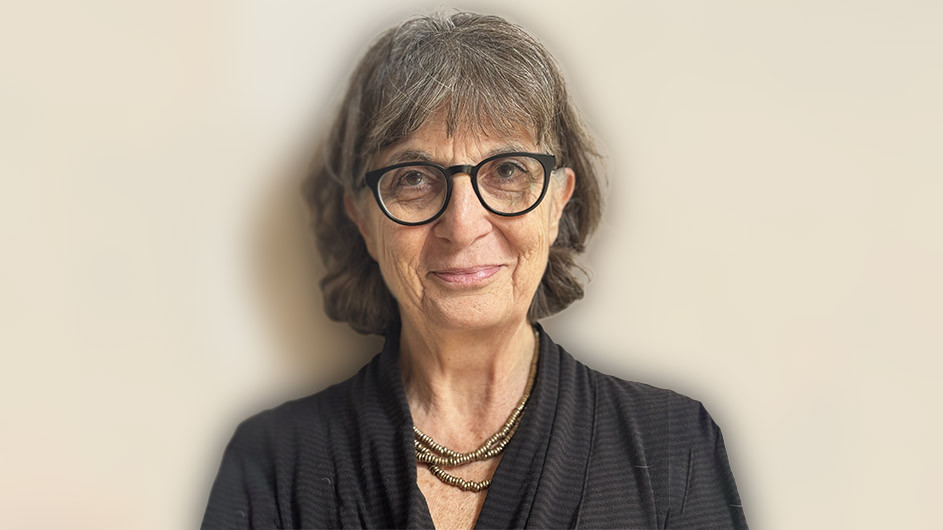
Lydia Goehr, Fred and Fannie Mack Professor of Humanities, is a teacher beloved by fellow faculty and students alike, as her University awards confirm: among others, Lenfest Distinguished Columbia Faculty Award, Graduate Student Advisory Council’s Faculty Mentoring Award, and Presidential Award for Outstanding Teaching.
Goehr has received numerous honors throughout her career—including Mellon, Getty, and Guggenheim fellowships—been a visiting professor at universities worldwide, and has published many books. The newest feather in her cap is becoming chair of the Philosophy Department.
Columbia News interviewed Goehr about her plans for the department, her newest book (about filmmaker David Lean), and the importance of the discipline of philosophy.
As the new chair of philosophy, what are your plans for the department?
I hope to encourage and maintain an already high standard of research and teaching in the department, while remaining attentive and knowledgeable about the challenges that currently confront the University in these difficult times. I am both a senator and a chair. I am working with an extraordinarily efficient administrative and support staff, and with colleagues who care deeply about all that Columbia stands for.
While chair, will you continue to teach? If so, what are you teaching this semester, and in the spring?
I have a full load—Philosophy of Art at the introductory level, a thesis preparation seminar for PhD students, and a senior seminar and graduate seminar for next semester.
What sort of programming (both for students and public events) are planned for the department this year?
We have several excellent visiting speakers (locally to cut costs!) and some of the most eminent thinkers coming in to deliver endowed lectures, including Australian philosopher Peter Godfrey-Smith, computer scientist Scott Aaronson, and British philosopher Miranda Fricker. We are hoping to organize workshops and to continue reading groups and club activities for the students.
Why is the study of philosophy so important?
Because it encourages thought, thoughtfulness, without compromise. Because it asks hard questions without apology (or rather with subtle strategies of what an apology used to mean). Because it trains students for all sorts of fields, from law to medicine, from politics and economics to the arts.
What was your path to a career as an educator and writer?
A long path by now of making and writing about music. A long road of thinking critically about politics and the arts, about the history of philosophy and the philosophy of history.
How did your new book, David Lean: Filmmaker and Philosopher, come about?
I was invited to contribute to a series about filmmakers, where philosophers would author the books with the idea of drawing out philosophical motifs from the films. I wanted to write about Ernst Lubitsch because a lot of my work deals with Germany’s fraught history with Judaism. I chose David Lean because my grandfather, a German/Jewish exile to England, composed the score for Lean’s Great Expectations in 1946. I was brought up in an atmosphere of postwar British filmmaking. Working on the David Lean book took me back to the wonderful weekend double-bills that were enjoyed so much by my mother. I have lost both my parents recently.
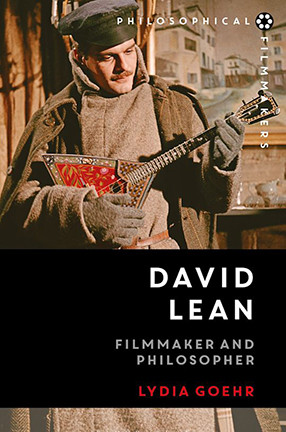
To go back to my youth in England was a way for me to think about loss, combined with what I learned most from my parents: How to survive loss not with the trickery, but with the intelligence of wit and wiles. In exploring Lean’s films, I explored their engagement with music and wit that Lean took over from his collaborator, Noel Coward. All my philosophical work in this century has been about wit and its analysis according to critical theory.
What are you working on now?
A book, Violin Lessons—on repetition, unlearning, reinvention modeled on the three sorts of practice that get you to Carnegie Hall. Practice, practice, practice!
Advice for anyone interested in pursuing a trajectory similar to yours?
Do it! There is no better way to live life than by thinking in the morning and making art in the afternoons.
What’s special about teaching at Columbia and in New York?
The University and the city make it almost impossible not to think about what matters the most to people whose well-being and livelihoods are at stake every day.